Emit & Compound
What exactly is "the leak"?
Every business running on AI is learning things constantly — and losing almost all of it.
Someone corrects a bad AI draft. Someone works out the phrasing that gets replies. Someone catches the claim that would have caused a compliance headache. Each lesson lives in one person's chat history, one closed conversation, one head — and the next person, the next tool, the next week starts from zero. You're paying for the same lesson over and over. That's the leak.
The fix isn't a smarter model. It's a small process: one shared ledger where lessons land, a ten-minute weekly review where the owner approves the ones that matter, and a rules page every AI tool in the business reads before it works. Set it up once — with a spreadsheet and a doc, no code — and a correction made on a Tuesday binds every seat, every tool, permanently.
I run the fully-automated version of this every day (my rules file grew from three rules to six in a single working session, with nothing carried by hand). The pattern that makes it work is free below. If you'd rather have it wired into your business by Friday, that's a call.
Jul 9 · AI draft review · claim · "Never quote a market stat without a named source — AI invented one that nearly shipped" · marketing · approved
Who this is for.
You run the business: founder, CTO, COO, owner, GM. You don't need AI that's smarter. You need AI that knows how you do things, does them your way, and still does them your way next quarter, in every seat, without anyone carrying the rules by hand. If you still see every rule your people give a customer, this is yours, whatever stage you're at with the tools.
Before letting AI near a customer, owners ask seven things: will my people use it, does it talk to our systems, does it sound like us and does a correction stick, can I trust it, is our data ours, what's the number, and who do I call. The home page answers each one with what runs today. The seven answers
Pick your leak
If it's a lesson someone learned and someone else will need, it belongs in the ledger. The full pattern — ledger, ritual, rules page, and the setup for your exact tools — is free.
Take the kit
The three artifacts the pattern needs, ready to copy. The ledger template as a Google Sheet (File → Make a copy and it's yours) or as markdown / CSV. The house-rules page template, with the loading instructions for ChatGPT, Claude, or a mixed shop built in. And the ten-minute weekly review checklist. No signup required — the kit is the pattern, not the paywall.
The gadgets
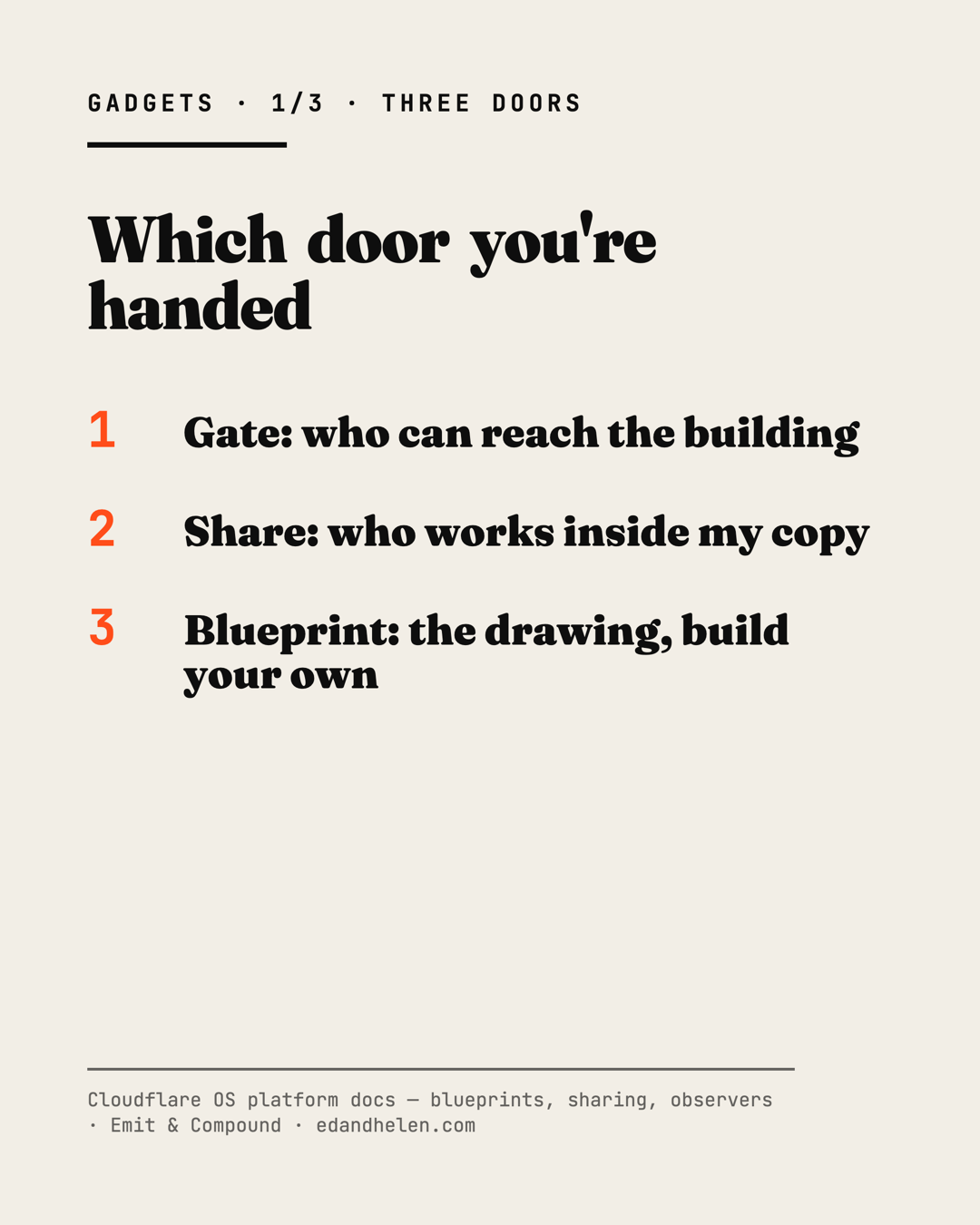
The pattern also runs as live software: small, sandboxed apps hosted at tools.edandhelen.com and handed out as Blueprints, not shared logins. You get the drawing and make your own copy; you never get our data and we never get yours. The instance is behind a gate while the first copies are finished, and the first Blueprint links arrive with the next post.
The ledger
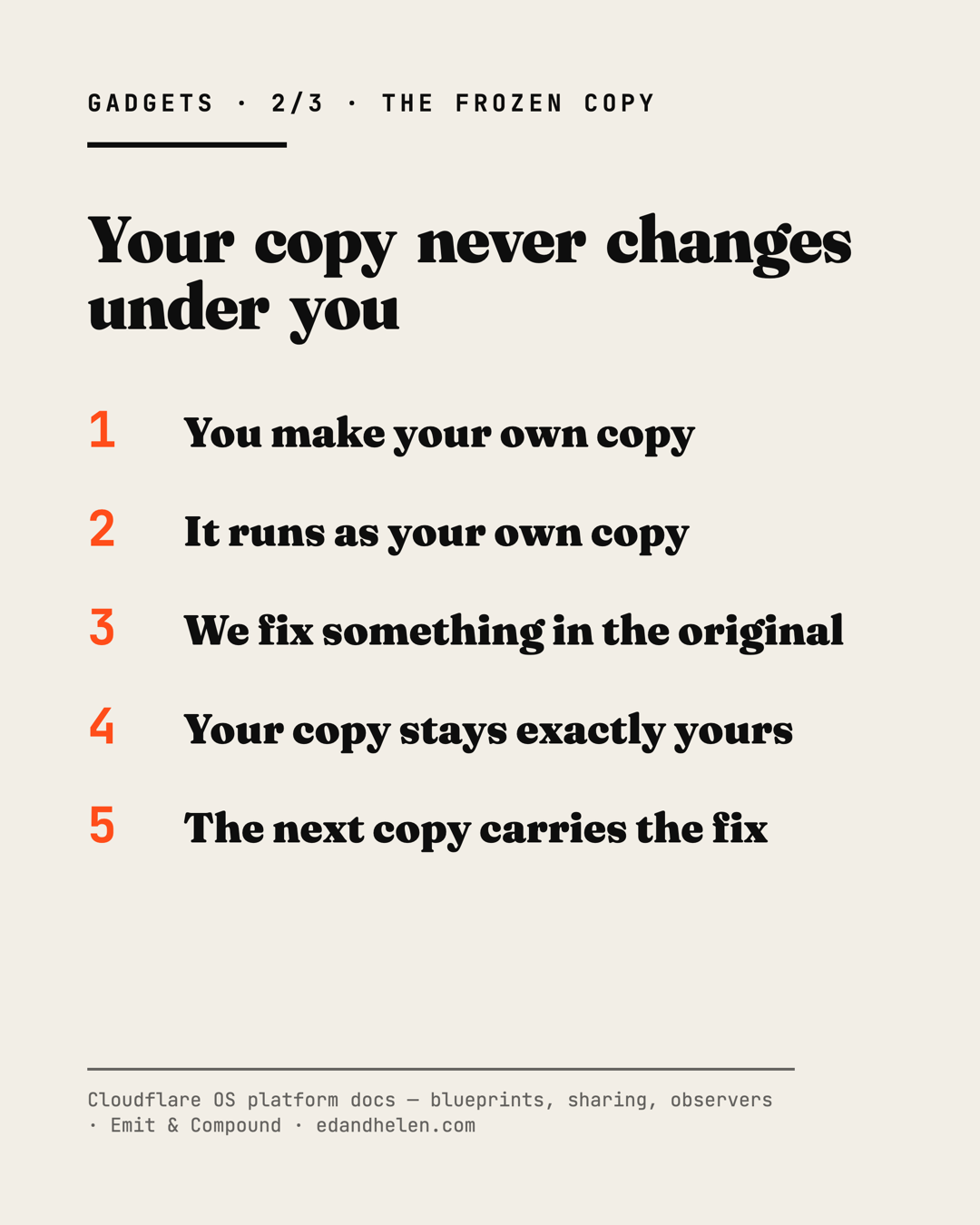
The Emit & Compound ledger as an app instead of a spreadsheet: one six-column table (date, source, type, what we learned, tag, status), a weekly review where the owner approves, edits, or rejects each proposed claim, and a house-rules view that lists everything approved so every tool can read it. Built by describing it to the platform in one paragraph. A Blueprint copy is frozen the moment you make it: nothing flows from our copy into yours, and you change yours by asking.
StockSense
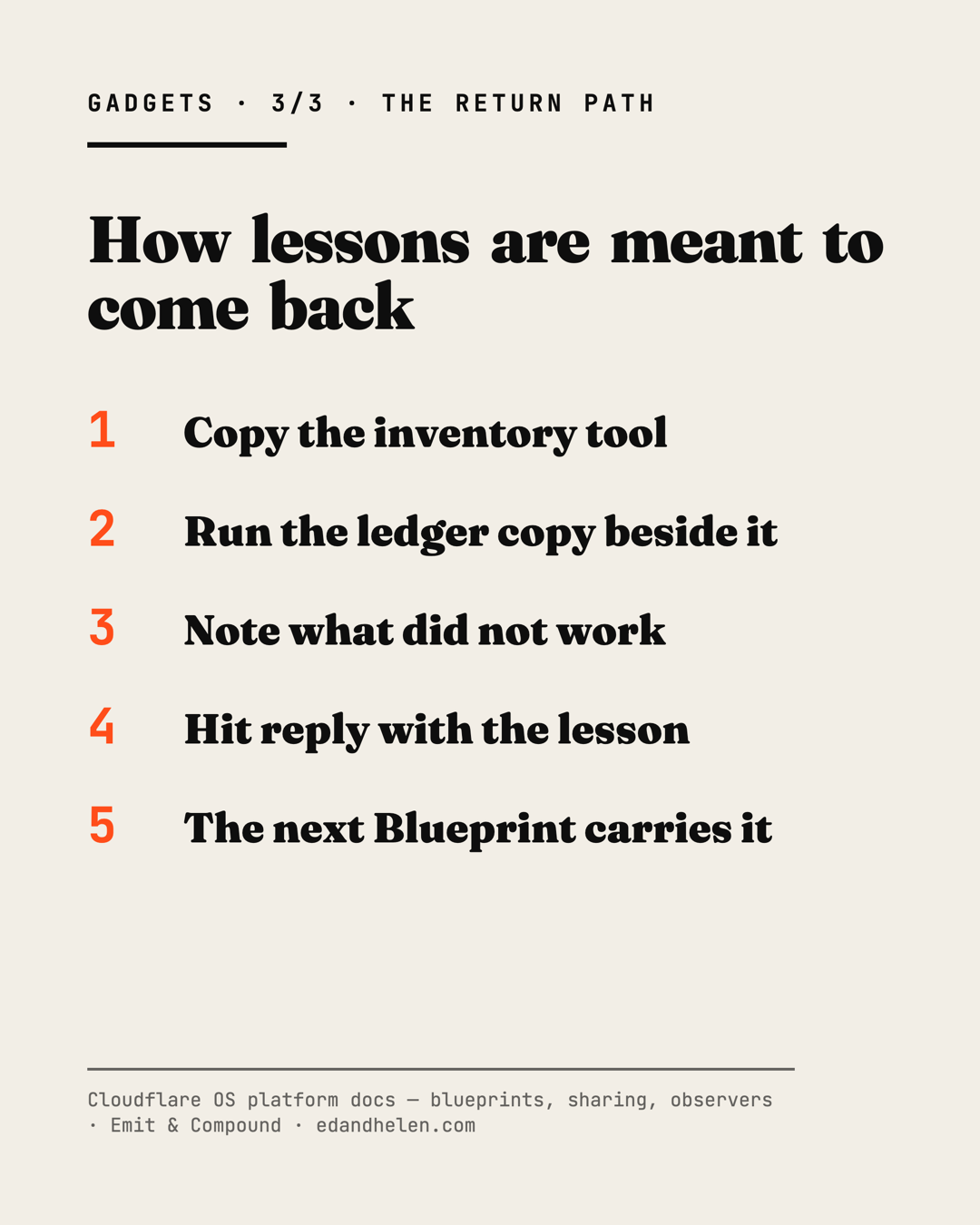
An inventory tool for a small operation: an append-only ledger of movements, stock computed from it rather than typed over, structured locations, first-expiry-first-out views for anything with a date, and a read-only assistant you can ask questions of. Writes go through a proposals panel, so approval is by design and by instruction: proposed, then approved, never assumed. Export is CSV. Same frozen-copy rule as the ledger.
Three cards explain what you will and will not get from a Blueprint copy.
Get the pattern + the build log
The complete pattern document is free. The build log follows it — real logs, real rules, real mistakes.
How I work with businesses: /work
The Library: /library